THÁI NGUYÊN The Bá Vân Horse Breeding Farm, now the Mountain Livestock Research and Development Centre in Bình Sơn commune, Sông Công City, Thái Nguyên Province was established in April 1960 to research and transfer horse breeding techniques to serve the lives and production of ethnic communities in the northern mountainous region.
Since its establishment, the centre has faced numerous challenges and hardships, mirroring the difficulties of the nation. Today the Mountain Livestock Research and Development Centre is known as the institution that researches and preserves the largest gene pool of horses and buffalo in the country. With its predecessor being the Bá Vân Horse Breeding Farm, the centre has accumulated many years of experience in researching and developing horse breeds in Việt Nam.
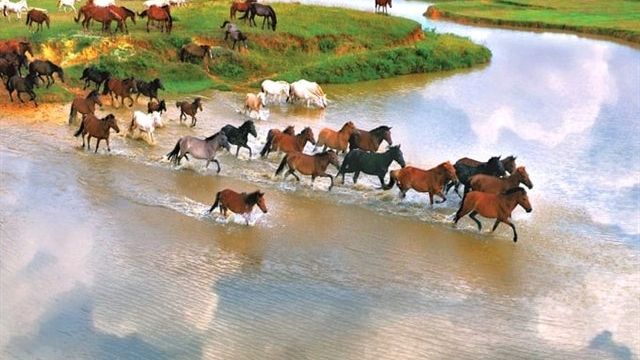
In the past, horses were closely linked with the daily lives of people in the northern mountainous ethnic communities. Horses served as transportation, cargo carriers, and draught animals for ploughing fields and pulling carts. There was a significant demand for various horse breeds to meet the needs of people’s livelihoods.
Notably, the border guard forces in provinces like Điện Biên, Hà Giang and Cao Bằng still ride horses when patrolling and guarding along the border. And although transportation has become more convenient and modern, especially in border areas with challenging terrain, horses remain valuable assets for the people in mountainous regions.le's livelihoods.
On August 9-10, the gastronomic festival "Nyan Fest" will be held for the first time in Yamal. Chefs and culinary experts will showcase their skills in preparing dishes of the indigenous northern peoples
The press service of the Ministry of Culture of Astrakhan Region has announced that the International Classical Arts Festival "Caspian Seasons" will be held in Astrakhan from August 17 to September 1
The press service of the Russian Union of Travel Industry has announced that the national tourism portal Puteshestvuem.RF has published the first 50 car travel routes across 47 regions of Russia
The press service of the government of the Kabardino-Balkaria Republic has announced that a group of enthusiasts from St. Petersburg has installed the world's first climb counter at the summit of Elbrus

 Blogs
Blogs